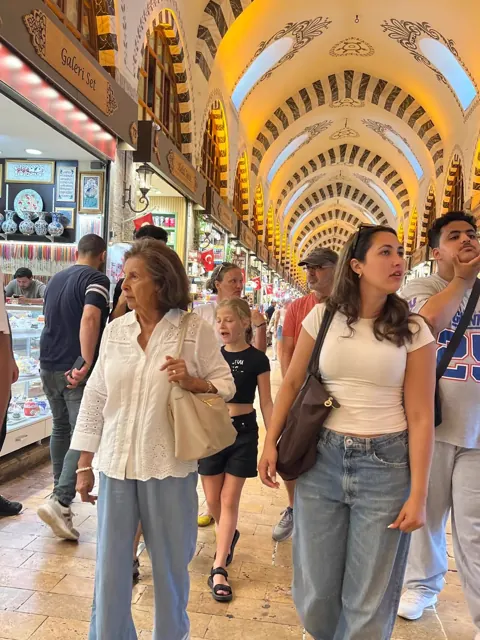
Is Istanbul Safe for Americans? 2026 Honest Safety Guide
Yes — Istanbul is safe for American travellers. Violent crime against tourists is rare, US citizens are not targeted, and the practical risks are ordinary ones: pickpocketing on the tram, taxi and shoeshine scams, and inflated bar bills. The US State Department places Türkiye at Level 2 ("exercise increased caution"), the same level as France, Italy, Spain and the UK.
Quick facts
| US State Department advisory | Level 2 — Exercise Increased Caution (Türkiye) |
|---|---|
| Areas the US advises against | Within 10 km of the Syrian border and Şırnak/Hakkâri provinces — roughly 1,300 km from Istanbul |
| Violent crime risk for tourists | Low |
| Most common tourist problem | Pickpocketing, taxi meter and shoeshine scams, bar bill scams |
| Emergency number | 112 (police, ambulance, fire) |
| Tourism police, Sultanahmet | +90 212 527 4503 |
| US Consulate General Istanbul | İstinye, Sarıyer — +90 212 335 9000 |
| Do women travel alone here? | Yes, commonly — normal city precautions apply |
| Tap water | Chlorinated and treated; most residents drink bottled |
| Earthquake risk | Real long-term risk; hotels follow post-1999 codes, know the drill |
What the US State Department actually says
Türkiye sits at Level 2 of four — "exercise increased caution" — because of terrorism and arbitrary detention risk nationwide. Level 2 is the same rating carried by France, Italy, Spain, Germany and the United Kingdom, so it is not a warning against travel.
The only Level 4 "do not travel" zones are within 10 km of the Syrian border and the provinces of Şırnak and Hakkâri in the far southeast. Istanbul is roughly 1,300 km away and is not covered by any regional restriction.
Registering with the STEP programme before you fly means the consulate can reach you if anything major happens. It takes two minutes and is free.
Real risks vs. imagined risks
| Risk | How likely | What to do |
|---|---|---|
| Pickpocketing on tram T1, Istiklal, Grand Bazaar | Common | Front pockets or a zipped cross-body bag; no phone in a back pocket |
| Taxi refusing the meter or taking a long route | Common | Use BiTaksi/Uber in-app, or the metro and Marmaray |
| Shoeshine 'dropped brush' scam | Common near Sultanahmet | Keep walking; the fee demanded afterwards is the scam |
| Invited to a bar by a friendly local, then a huge bill | Occasional, targets solo men | Never follow a street invitation to a bar you did not choose |
| Violent crime against tourists | Rare | Standard big-city awareness after midnight |
| Protests and police road closures | Occasional, Taksim/Beşiktaş | Leave the area; do not film police |
| Terrorism | Low but non-zero | Avoid crowds around political anniversaries; follow local news |
| Earthquake | Low on a given trip, real long-term | Check your hotel's exit route; drop, cover, hold on |
Where to stay if safety is your priority
- Sultanahmet — the historic core, heavily policed, walkable to Hagia Sophia and Topkapı. Quiet at night.
- Galata / Karaköy — lively, well-lit, good restaurants, short tram or funicular ride to the old city.
- Beşiktaş / Nişantaşı — residential and upscale, very low hassle, best for repeat visitors.
- Kadıköy (Asian side) — relaxed, local, excellent food, ferry commute to the sights.
- Areas to be more alert in late at night: the back streets off Istiklal after 01:00, Aksaray, Tarlabaşı and Laleli.
Solo, female and LGBTQ+ American travellers
Solo women travel Istanbul routinely. Expect some conversational attention in tourist bazaars — a firm "hayır, teşekkürler" (no, thank you) ends it. There is no dress code in the city; a scarf is only needed to enter a mosque, and mosques lend them at the door.
Istanbul is the most liberal city in Türkiye, and same-sex relationships are legal. Public displays of affection draw stares anywhere in the country, and Pride marches are not permitted, so discretion in public is the practical norm.
Practical rules that prevent almost every problem
- Agree the price before a shoeshine, a boat ride, a fish sandwich or a bazaar carpet tea.
- Pay with a card where you can, and always check the meter is running in a yellow taxi.
- Carry your passport photocopy; leave the original in the hotel safe.
- Do not post political commentary about Türkiye on social media while in the country.
- Save 112 and the US Consulate number offline before you land.
- Buy travel insurance that covers medical evacuation — private hospitals are excellent but expect payment upfront.
Frequently asked questions
Is Istanbul safe for American tourists in 2026?
Yes. Istanbul is safe for American tourists. Violent crime against visitors is rare and Americans are not singled out. The US State Department rates Türkiye Level 2 (exercise increased caution), the same as France, Spain and the UK. The realistic risks are pickpocketing and tourist scams, not violence.
Do Americans need a visa for Türkiye?
No. US passport holders can enter Türkiye visa-free for stays up to 90 days within any 180-day period, provided the passport is valid for at least 150 days from the date of entry.
Is it safe to walk around Istanbul at night?
In Sultanahmet, Galata, Karaköy, Beşiktaş, Nişantaşı and Kadıköy, yes — these areas stay busy and well-lit late into the evening. Use a ride-hailing app rather than empty back streets after around 01:00, particularly around Tarlabaşı and Aksaray.
Are there terrorism risks in Istanbul?
The risk is low but not zero, which is why Türkiye carries a Level 2 advisory. There have been no attacks affecting the main tourist districts in recent years. Avoid political demonstrations and large crowds around politically sensitive anniversaries.
What are the most common scams in Istanbul?
The shoeshine 'dropped brush' scam near Sultanahmet, taxis refusing the meter or taking long routes, a friendly stranger inviting you to a bar and producing an inflated bill, and inflated prices for fish sandwiches or boat rides where no price was agreed in advance.
Is Istanbul safe for solo female travellers from the US?
Yes. Solo women visit Istanbul in large numbers. There is no dress code outside mosques, harassment is usually limited to persistent sales talk in bazaars, and staying in Beşiktaş, Galata or Kadıköy makes evenings comfortable.
Is the earthquake risk a reason to avoid Istanbul?
No. Istanbul sits near the North Anatolian Fault and a major earthquake is expected within decades, but the chance of one during a specific one-week trip is very small. Hotels built after 1999 follow stricter codes; check your exit route and know to drop, cover and hold on.
Can I drink the tap water in Istanbul?
Tap water is treated and chlorinated, and it is safe for brushing teeth and washing food. Because of old building pipework and the taste, almost everyone drinks bottled or filtered water, which costs very little.
Related guides
Moments from our tours