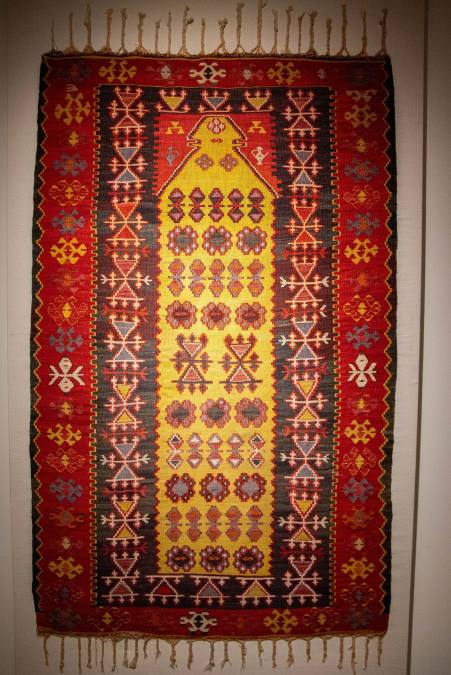
Turkish Hand-Weaving: Kilim, Halı, Cicim and How to Read ...
✓ Last reviewed: 29 September 2026 — Verified and updated by İlyas Bayrak, licensed Turkish guide (licence 070867), with the My Turkey Adventure editorial team. Prices, opening hours, transport fares and visa rules reflect the latest 2026 guidance. Quick Answer: A comprehensive Turkish rug guide enables travellers to "read" a carpet by understanding its construction—distinguishing a flat-woven Turkish kilim from a knotted halı or brocaded cicim —and its symbolic motifs. Learning to identify the knot type, dyes, materials, and regional styles of Anatolian weaving is the key to appreciating this ancient art and learning how to buy a Turkish carpet with confidence. Fact Detail Main Weaving Regions Aegean Coast ( Bergama , Milas ), Central Anatolia ( Konya , Cappadocia ), Eastern Anatolia ( Kars , Van ), Marmara ( Hereke ) Primary Materials Wool, cotton, silk, goat hair Key Weave Types Halı (knotted pile), Kilim (slit-tapestry flatweave), Cicim/Zili/Sumak (brocaded flatweaves) Common Natural Dyes Madder (red), Indigo (blue), Weld (yellow), Walnut (brown), Pomegranate (black/brown) Best Time to Visit Workshops are open year-round, but spring and autumn offer the most pleasant travel weather in Turkey . For more tips, see our guide on the best time to visit Turkey . Approximate Price Band $50 USD for a small souvenir piece to $20,000+ USD for a fine silk or antique carpet. What Are the Main Families of Turkish Hand-Weaving? Stepping into a Turkish carpet shop is like entering a library where every book is written in a vibrant, tactile language. To a traveller, the sheer variety can be overwhelming, but understanding the four main "families" of Anatolian weaving is the first step to literacy. This ancient practice is a cornerstone of Turkish crafts and traditions . Each type of weave tells a different story through its texture and construction. Halı (Knotted Pile Carpet): This is what most people picture as a "Turkish carpet." It has a plush, raised pile created by tying i