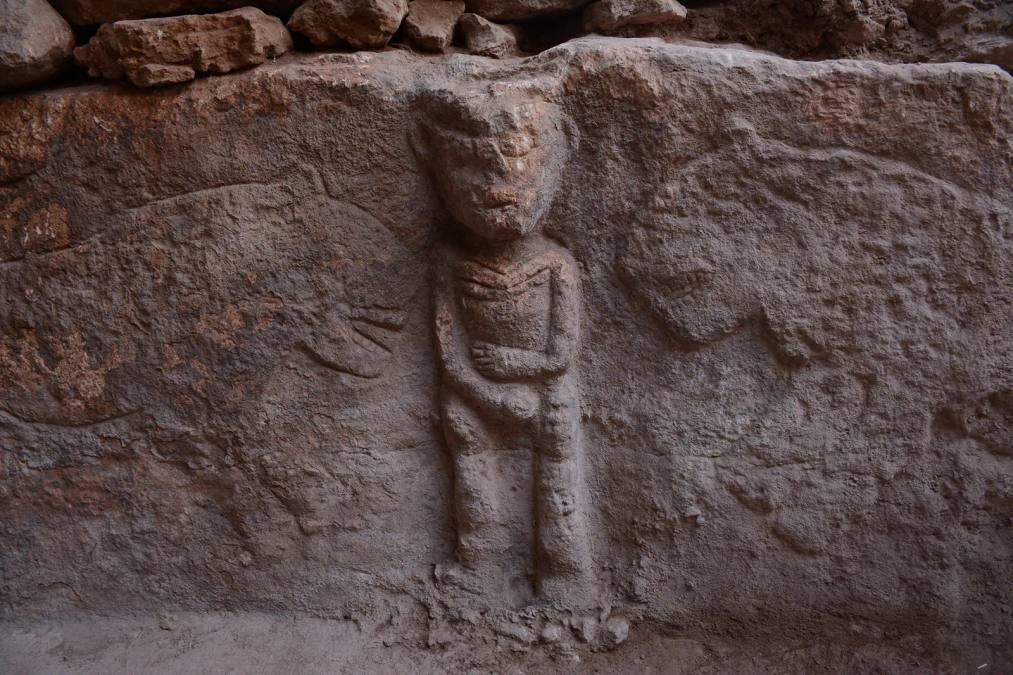
Sayburç Reliefs: World's Oldest Narrative Scene
✓ Last reviewed: 29 September 2026 — Verified and updated by İlyas Bayrak, licensed Turkish guide (licence 070867), with the My Turkey Adventure editorial team. Prices, opening hours, transport fares and visa rules reflect the latest 2026 guidance. Quick Answer: The Sayburç reliefs are an 11,000-year-old carved stone panel discovered in a Pre-Pottery Neolithic settlement in southeastern Turkey . Found in 2021 beneath a modern village near Şanlıurfa, the panel depicts two related scenes featuring a man, leopards, and a bull, which archaeologists consider the world's oldest known narrative art—a complete story carved in stone. What Exactly Are the Sayburç Reliefs? Imagine a story so old, it was carved into a stone bench before the invention of pottery, writing, or the wheel. This isn't science fiction; it's the reality of the Sayburç reliefs, a groundbreaking discovery that is reshaping our understanding of prehistoric humanity. Found in the village of Sayburç , approximately 55 km (34 miles) southwest of the ancient city of Şanlıurfa in southeastern Turkey , these carvings are part of a much larger archaeological puzzle known as the Taş Tepeler , or "Stone Hills." The reliefs were unearthed in 2021 during an excavation led by Dr. Eylem Özdoğan from Istanbul University. They weren't on a random rock; they were carved directly into the face of a limestone bench running along the wall of a large, semi-subterranean communal building. This structure, measuring about 11 meters (36 feet) in diameter, features characteristics now famous in the region, including distinctive T-shaped pillars similar to those at Göbekli Tepe . The panel itself is roughly 3.7 meters (12 feet) long and consists of five figures that form a coherent and dramatic scene. This isn't just a random assortment of animals and people; it's a deliberate composition, a story told in stone by our Stone Age ancestors. The discovery of a narrative this complex, dating back to the 9th millennium BCE, provides a