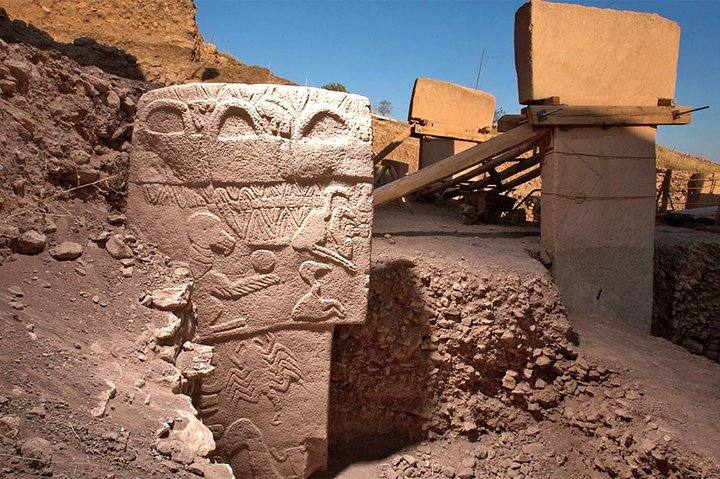
Şanlıurfa Archaeology Museum: Complete Visitor Guide
✓ Last reviewed: 29 September 2026 — Verified and updated by İlyas Bayrak, licensed Turkish guide (licence 070867), with the My Turkey Adventure editorial team. Prices, opening hours, transport fares and visa rules reflect the latest 2026 guidance. Quick Answer: The Şanlıurfa Archaeology Museum is an essential, world-class institution and the single best place to understand the Neolithic Revolution in Turkey. You must visit it before heading to Göbekli Tepe or Karahantepe. Plan to spend at least three to four hours here; the entrance fee is approximately $15 USD , which includes the adjacent mosaic museum. What Is the Şanlıurfa Archaeology Museum and Why Is It So Important? Imagine standing face-to-face with the world's oldest life-sized human statue, a figure carved by hunter-gatherers 11,000 years ago. Picture yourself walking through a full-scale, scientifically exact reconstruction of a Göbekli Tepe temple, feeling the power of its T-shaped pillars just as its builders did. This isn't a fantasy; it's the reality of the Şanlıurfa Archaeology Museum . Opened in 2015 , this colossal museum (one of the largest in Turkey) is far more than a collection of old stones. It is the narrative heart of humanity's greatest turning point: the Neolithic Revolution. While the archaeological sites of Göbekli Tepe and Karahantepe are awe-inspiring, they are also exposed, weathered, and can be difficult to interpret on their own. The museum is the key that unlocks their secrets. It houses the most delicate, significant, and emotionally resonant artifacts excavated from these sites, all preserved in pristine, climate-controlled conditions. For any traveler to southeastern Turkey, especially those from the US on a journey to understand deep history, this museum is not optional. It is the indispensable prologue to the story of civilization itself. Visiting the sites without seeing the museum first is like reading the last chapter of a book without the first. Here, the abstract concept