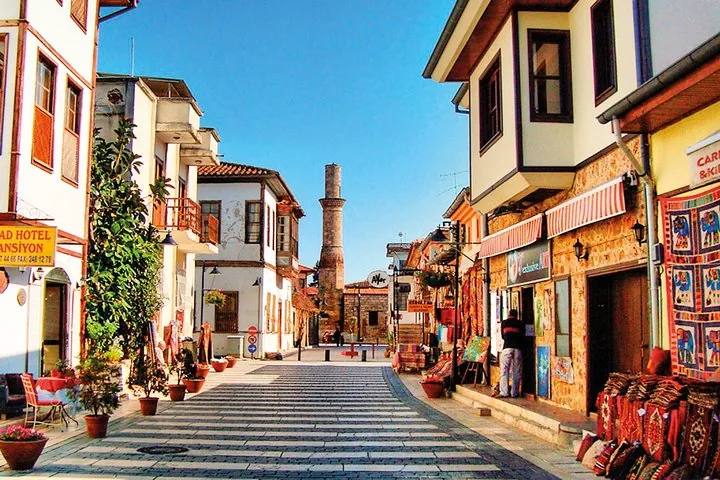
Kaleiçi Old Town Antalya: Expert Guide
Quick Answer: Kaleiçi is Antalya’s historic walled old town, where Roman monuments, Seljuk architecture and restored Ottoman houses surround the old harbour. Explore it on foot, allowing time for cobbled lanes, sea views and a courtyard meal rather than treating it as a single attraction. Entry to the district is free, but museums, beach facilities and boat trips have separate charges. What makes Kaleiçi historically important? Kaleiçi preserves several chapters of Antalya’s history within a compact coastal district. King Attalos II of Pergamon founded Attaleia in the second century BCE, choosing a natural harbour protected by cliffs. The relationship between the port and the settlement above it remains easy to understand as you walk from the upper streets down to the marina. The Roman layer is particularly visible. Hadrian’s Gate commemorates Emperor Hadrian’s visit in 130 CE, while the second-century Hıdırlık Tower overlooks the coast. Its original function is less certain; a lighthouse or watchtower is among the explanations. Byzantine history forms another layer, especially at religious sites that changed use over the centuries. The Seljuks took Antalya in the early thirteenth century. Their most recognisable landmark is Yivli Minare, the Fluted Minaret, which remains a symbol of the city. Ottoman-era houses subsequently shaped much of the streetscape, with timber framing, projecting upper floors known as cumba , and private inner courtyards. Restoration beginning in the 1980s helped bring neglected mansions back into use as hotels, restaurants and other businesses. Kaleiçi is therefore both a historic neighbourhood and a working visitor district, not an enclosed archaeological site. For its relationship to the modern city and coast, see the broader Antalya travel guide . Which landmarks should you prioritise? The main sights reward different kinds of attention: carved stone at the gate, domestic architecture in the lanes, and the changing relationship between t