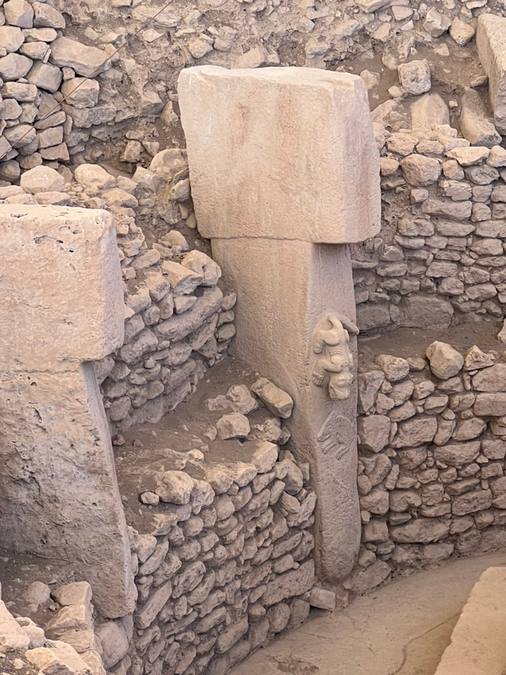
Göbeklitepe (~9600 BC): The Temple That Rewrote Human His...

✓ Last reviewed: May 2026 — Verified and updated by our licensed Turkey travel experts. Prices, opening hours and visa rules reflect the latest 2026 guidance. This article on Göbeklitepe is a cornerstone of our reverse-chronology exploration of human heritage in Türkiye; you can explore the full History of Türkiye series to journey even further back in time with us. Quick Answer: Göbeklitepe is the world's oldest known temple, located near Şanlıurfa in southeastern Turkey and dating back to approximately 9600 BC . Discovered by German archaeologist Klaus Schmidt in 1994 , this Pre-Pottery Neolithic site consists of massive T-shaped pillars arranged in circles, built by hunter-gatherers thousands of years before the invention of writing, pottery, or agriculture. A Journey to the Dawn of Belief Welcome to a place that shouldn't exist. A place that tore up the textbooks and forced us to rethink the very dawn of human civilization. Imagine a time 11,600 years ago . The last Ice Age has just ended. Humans are nomadic hunter-gatherers, living in small, mobile bands. They haven't yet planted a single seed of wheat, tamed a single animal, or fired a single pot. And yet, here on a windswept hill in what is now southeastern Türkiye, they came together to build a cathedral. This is the story of Göbeklitepe, the "Potbellied Hill" that stands as the zero point of human monumental architecture. What Exactly is Göbeklitepe? Göbeklitepe (pronounced goh-bek-lee TEH-peh ) is a sprawling archaeological site crowning a hilltop ridge in the Germuş mountains of southeastern Anatolia, about 15 kilometers (9 miles) northeast of the city of Şanlıurfa . Radiocarbon dating places its oldest layers at an astonishing 9600 BC . To put that in perspective, it is: Roughly 6,500 years older than Stonehenge in England. Approximately 7,000 years older than the Great Pyramid of Giza in Egypt. Twice as old as the earliest known writing from Sumeria. This is not a city. Archaeologists have found no sign