Çatalhöyük (7400–6200 BC): The World's First City Was in ...
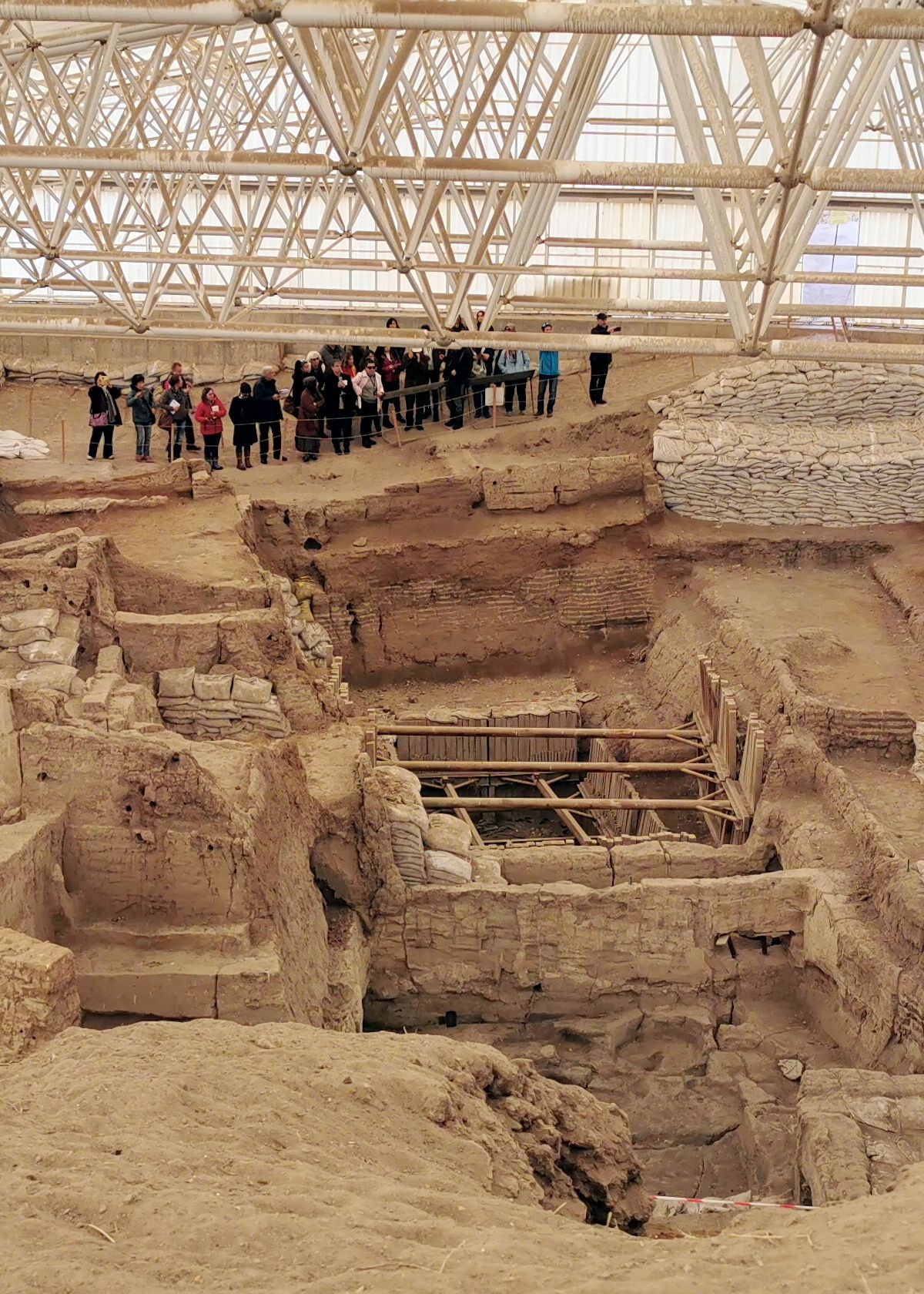
✓ Last reviewed: May 2026 — Verified and updated by our licensed Turkey travel experts. Prices, opening hours and visa rules reflect the latest 2026 guidance. As we journey back through millennia, this article continues our full History of Türkiye series , uncovering the deepest roots of civilization in Anatolia. Quick Answer: Çatalhöyük , located near modern-day Konya in Türkiye, was a massive Neolithic proto-city that flourished between 7400–6200 BC . Considered by many to be the world's first city, it housed up to 8,000 people in a unique honeycomb of mudbrick houses entered from the roof and is famed for its rich symbolic art, including the Hasan Dağ wall painting and the 'Seated Woman of Çatalhöyük' figurine. Welcome, fellow history lovers and adventurers! Here at My Turkey Adventure, we often guide travelers through the dazzling ruins of Ephesus or the grand mosques of Istanbul. But today, we're travelling much further back in time—over 9,000 years, to be precise. Forget written language, forget the wheel, forget empires. We're heading to the fertile plains of Central Anatolia to a place that fundamentally redefines our understanding of urban living: the incredible Neolithic settlement of Çatalhöyük . This isn't just a collection of ancient huts; it's a sprawling, sophisticated, and deeply symbolic community that some call the world's first city. It’s a cornerstone of human history, and its story is uniquely and proudly part of the heritage of modern Türkiye. Join us as we peel back the layers of this giant earthen mound to discover a world without streets, where gods were worshipped at home, and the dead were buried right under your feet. What is Çatalhöyük? Çatalhöyük (pronounced 'cha-tal-hoy-ook') is one of the most important archaeological sites on the planet. Designated a Çatalhöyük UNESCO World Heritage Site in 2012 , it is a vast archaeological 'tell', or settlement mound, created by nearly 1,200 years of continuous human occupation. What you see today