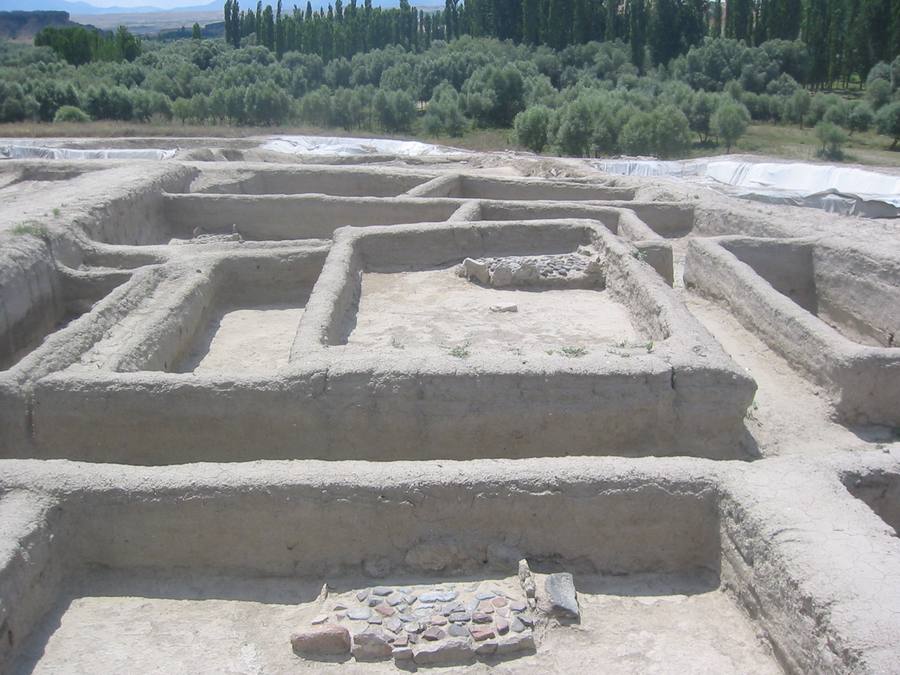
Aşıklı Höyük: The 10,000-Year-Old Village Before Çatalhöyük
✓ Last reviewed: 29 September 2026 — Verified and updated by İlyas Bayrak, licensed Turkish guide (licence 070867), with the My Turkey Adventure editorial team. Prices, opening hours, transport fares and visa rules reflect the latest 2026 guidance. Quick Answer: Aşıklı Höyük is a 10,000 -year-old pre-pottery Neolithic settlement in Aksaray , Turkey , making it one of the earliest examples of a settled village in Anatolia . For history enthusiasts and those seeking experiences beyond Cappadocia's main tourist trail, this incredible Aksaray Neolithic site is absolutely worth visiting to stand in a place where humanity first transitioned from hunting to farming. Fact Detail Location Kızılkaya village, Aksaray province, Central Anatolia, Turkey Period / Type Pre-Pottery Neolithic Settlement (c. 8,400 - 7,400 BC ) What It Is One of Central Anatolia's earliest villages, a höyük (settlement mound) with reconstructed Neolithic houses. UNESCO Status Included on Türkiye 's Tentative List for World Heritage inscription. Entry Typically free or a very small fee may be requested. Last checked September 2026 , confirm locally. Typical Visit Length 45 - 60 minutes Nearest Airport Nevşehir Kapadokya Airport (NAV) Driving Time from Aksaray Approximately 30-40 minutes (25 km) Best Months April-June, September-October (to avoid extreme summer heat and winter cold) What Is Aşıklı Höyük? As licensed guides in Turkey , we often get asked about the "first" places—the oldest city, the first temple. While Göbekli Tepe holds the title for the first temple complex, Aşıklı Höyük represents something just as profound: one of the very first settled villages in Central Anatolia . Located on a bend of the Melendiz River in the Aksaray province, this is not just a collection of ruins; it is a höyük , an archaeological mound built up over a thousand years of continuous human occupation, starting around 8,400 BC . That makes it about a millennium older than the main layers of its more famous cousin,