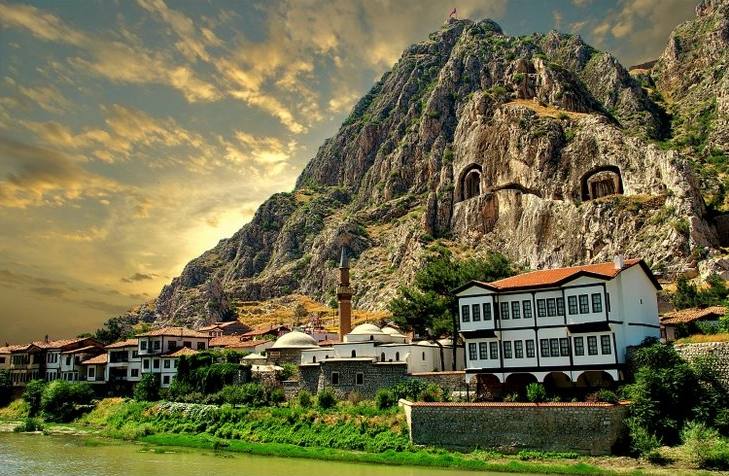
Amasya: Rock Tombs of the Pontic Kings Above the Yeşilırmak
✓ Last reviewed: 29 September 2026 — Verified and updated by İlyas Bayrak, licensed Turkish guide (licence 070867), with the My Turkey Adventure editorial team. Prices, opening hours, transport fares and visa rules reflect the latest 2026 guidance. Quick Answer: Amasya is one of Turkey's most dramatically beautiful cities, a hidden gem nestled in a narrow river gorge and crowned by the monumental Amasya rock tombs . It is absolutely worth visiting for its unique blend of ancient Pontic history, charming riverside Ottoman houses , and significant role in the founding of the Turkish Republic, making it a highlight of any trip through northern Turkey . Fact Detail Location Amasya Province, Black Sea hinterland, northern Turkey Period / Type Hellenistic (Pontic Kingdom), Seljuk, Ottoman, and early Republican era city What It Is A historic city famed for its rock-cut royal tombs carved into a cliff above the Yeşilırmak river, lined with traditional houses. UNESCO Status "The Rock-Tombs of the Pontic Kings in Amasya" is on the UNESCO Tentative List. Entry Small entry fees are required for the tombs, the castle, and museums. Prices were last checked in September 2026 ; please confirm locally. Typical Visit Length One full day and an evening. A two-day stay allows for a more relaxed pace and a side trip. Nearest Airport Samsun-Çarşamba Airport (SZF), approximately 130 km away. Driving Time from Major City Approximately 4 hours from Ankara (~330 km). Best Months April-June and September-October for pleasant weather. What Is Amasya and Where Is It Located? Amasya is a captivating provincial capital in northern Turkey , set within the lush, mountainous hinterland of the Black Sea region. What makes the city utterly unique is its setting. The entire historic core is squeezed into the dramatic, narrow gorge of the Yeşilırmak (Green River). On one side, the riverbank is lined with beautifully restored, timber-framed Ottoman houses , known as konaks . On the other, a sheer cliff f