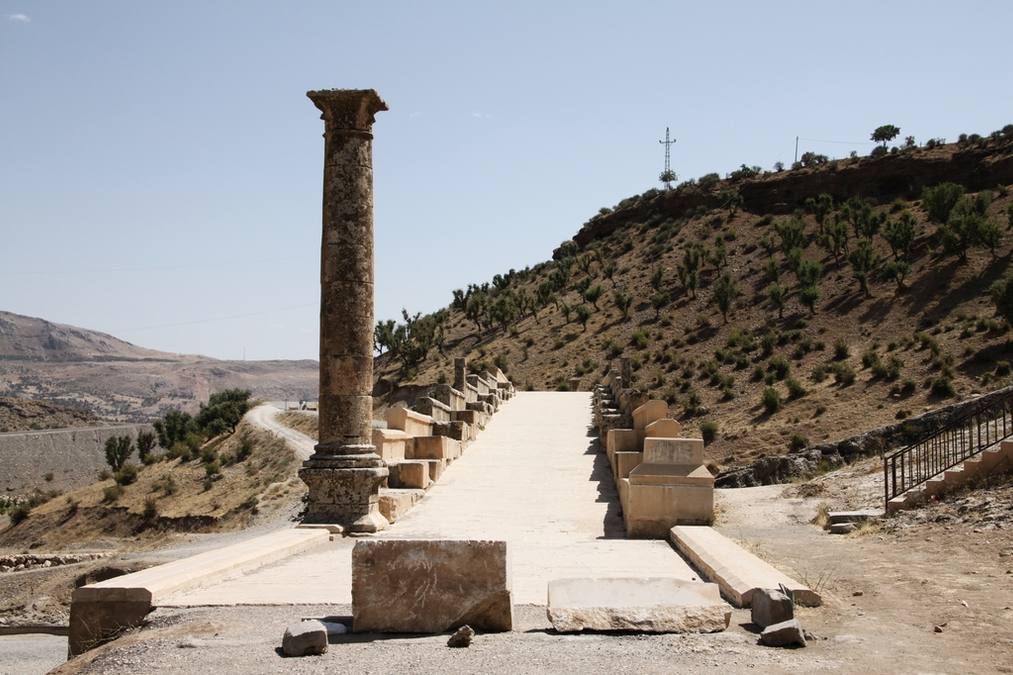
Adıyaman, Perre & Commagene: The Kingdom Behind Mount Nemrut
✓ Last reviewed: 29 September 2026 — Verified and updated by İlyas Bayrak, licensed Turkish guide (licence 070867), with the My Turkey Adventure editorial team. Prices, opening hours, transport fares and visa rules reflect the latest 2026 guidance. Quick Answer: Beyond the world-famous statues of Mount Nemrut , the province of Adıyaman is the heartland of the lost Commagene Kingdom , a fascinating realm blending Persian and Hellenistic cultures. It is absolutely worth visiting for its hauntingly beautiful royal tombs, Roman engineering marvels, and the evocative ruins of ancient cities like Perre , offering a profound journey into one of Türkiye’s most enigmatic historical landscapes. Fact Detail Location Adıyaman Province, Southeastern Anatolia, Türkiye. Main sites are near Adıyaman city and Kâhta . Period / Type Hellenistic ( Commagene Kingdom , 163 BC - 72 AD ) and Roman periods. What It Is The historical territory of a buffer kingdom famed for its monumental funerary structures and syncretic art. UNESCO Status Mount Nemrut is a UNESCO World Heritage site (inscribed in 1987 ). Entry The Mount Nemrut National Park (covering Nemrut, Karakuş, Arsameia, Cendere) typically has a combined ticket. The Adıyaman Museum and Perre Ancient City have separate entry fees. Confirm locally. Typical Visit Length 2 full days are recommended to see the main sites without rushing. Nearest Airport Adıyaman Airport (VAS). Alternatively, Gaziantep (GZT) or Malatya (MLX). Driving Time from Big City About 2.5 hours from Gaziantep ; about 1.5 hours from Malatya . Best Months to Visit May-June and September-October for pleasant temperatures. What Is the Lost Kingdom of Commagene? The Commagene Kingdom was a small but wealthy Hellenistic-era kingdom that flourished in what is now southeastern Türkiye from 163 BC to 72 AD . Positioned as a buffer state between the Roman Empire to the west and the Parthian Empire to the east, it was a cultural crossroads. Its rulers, most famously Antiochus I