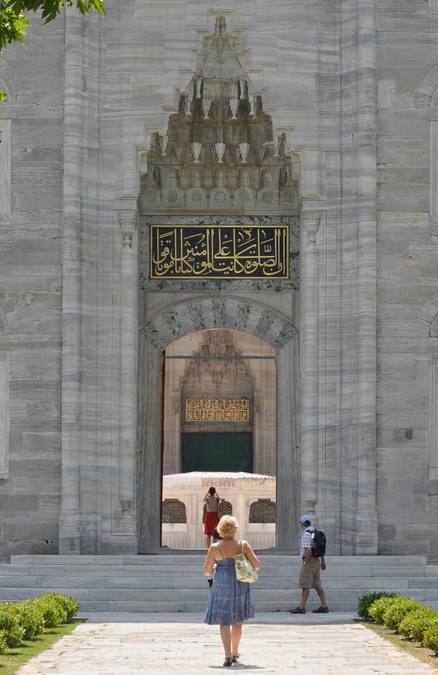
7 Hills of Istanbul Turkey - Hilltop Guide
✓ Last reviewed: 29 September 2026 — Verified and updated by İlyas Bayrak, licensed Turkish guide (licence 070867), with the My Turkey Adventure editorial team. Prices, opening hours, transport fares and visa rules reflect the latest 2026 guidance. Ready to book? Private Istanbul day tours start from $199 per person — see private Istanbul tours . Istanbul 360 — a 360° look at Istanbul filmed on our private city tour. Quick Answer: The 7 Hills of Istanbul are the seven historic hilltops within the old city walls of the Constantinople era, each crowned by a magnificent imperial mosque or landmark. Exploring them is the definitive way to understand Istanbul's rich Byzantine and Ottoman history. A comprehensive private tour covering the main hills typically costs between $150 and $250 USD per person for a full day, offering an unparalleled deep dive into the heart of Turkey . What Are the 7 Hills of Istanbul and Why Are They So Important? Istanbul, the timeless city straddling Europe and Asia, was, much like ancient Rome, famously founded upon seven hills. This wasn't a coincidence; when Emperor Constantine the Great refounded the city as "New Rome" in 330 AD , he intentionally mirrored the geography of the original Roman capital. These seven hills, all located on the historic peninsula west of the Bosphorus and cradled by the Golden Horn and the Sea of Marmara, formed the core of both Byzantine Constantinople and Ottoman Istanbul. They were never just geographical bumps; they were strategic military vantage points, sacred religious centers, and the foundational framework for the city's urban development. Each hilltop was crowned with forums and churches by the Byzantines, and later, with grand imperial mosques and their corresponding social complexes ( külliye ) by the Ottoman sultans. To walk these seven hills is to trace the very timeline of Istanbul's power, faith, and daily life. For a complete understanding of this layered metropolis, exploring these elevations is